Slide 6 of 19
Notes:
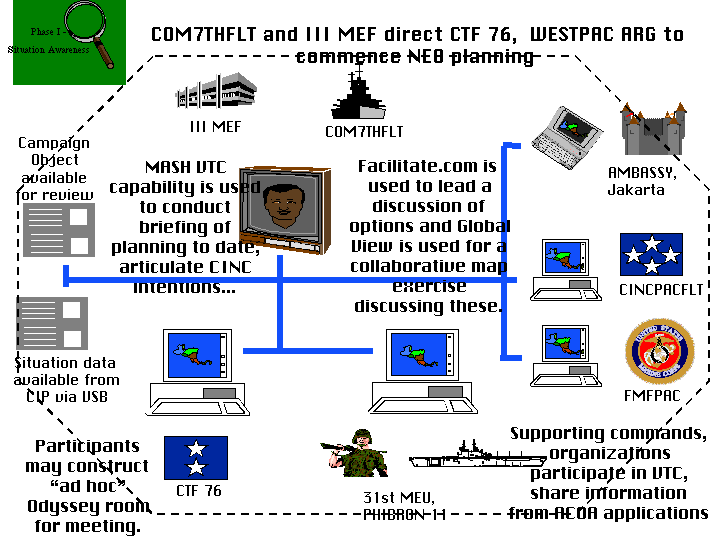
A primary advantage of the ACOA technologies is the ability to conduct forward-looking, continuous planning as the situation develops. As the condition of the Red Cross workers continues to deteriorate, the commanders of the USCP forces most concerned have begun to consider their options. COMSEVENTHFLT, embarked in the USS Blue Ridge, off the coast of Korea, and CG III MEF in Okinawa have jointly considered the options and believe that the forward deployed Amphibious Ready Group (ARG) is the most appropriate force for a non-combatant evacuation operation (NEO). The ARG, made up of PHIBRON 11 and the 31st MEU, is currently conducting exercises with Philippine forces. COMSEVENTHFLT and III MEF conduct a VTC session with CTF 76 and the ARG to outline their thoughts on the crisis to the Navy and USMC forces involved.
This collaborative session is held using the MASH and Facilitate.com tools to review the details of the situation and to gather initial thoughts on planning for the operation. The VSB allows the participants in this session to view the information developed to this point and the Virtual Plan Book (VPB) allows these forces to review preliminary planning by USCP by allowing review of the Campaign Object as it has been updated by the Web Planner. Possible actions are drawn out on a collaborative Global View map. Participants may “construct” a special Odyssey room to conduct this session. This room can later be transformed into a planning room for the JTF commander, should the crisis evolve to the point a JTF is formed.
This session is co-chaired by COMSEVENTHFLT and III MEF. Included in the session are the potential supporting commands and agencies shown. The embassy’s importance as a source for information and liaison is obvious. FMFPAC can assist in providing any additional USMC forces which may be needed. CINCPACFLT must consider the logistic impact of supporting the PHIBRON as it undertakes what could be extended operations in remote waters.