Slide 11 of 19
Notes:
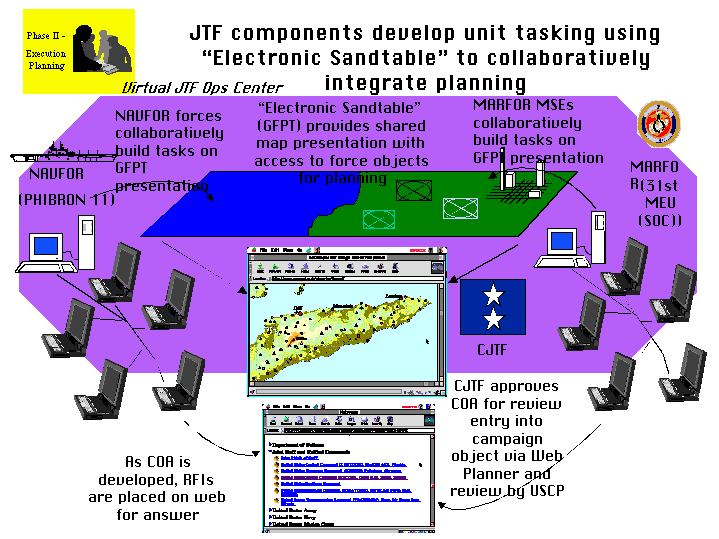
In refining the guidance from USCP into a detailed Course of Action (COA), the CJTF, his staff and his components (MARFOR, NAVFOR) utilize the GFPT “Electronic Sandtable” to sketch out the placement and movement of forces. Because the GFPT accesses databases directly associated with the objects placed on the map presentation, planners can review pertinent data (GSORTS readiness, location, weather) as they collaboratively plan using the Sandtable. GFPT� also supportsselect elements of the JTF staff in specialized planning activities. For example, the J2 will use GFPT to develop Intelligence Preparation of the Battlespace (IPB) plans and a “Red Cell” will also use GFPT to develop likely opposing or enemy COAs.�
As the Sandtable COA is developed, proposed actions and “what-ifs” will be entered on the presentation, creating the possibility of confusion. The CJTF staff is responsible for coordinating the final assignment of forces. Responsibilities for placing data on the Sandtable are predetermined to avoid confusion and conflict. For example, intelligence data will be coordinated and entered by the Belleau Wood JIC, and only the TACRON will establish air control corridors. The process of controlling how objects are placed on the GFPT presentation is analogous to the drawing of acetate layers on combat charts during manual planning: different planners are responsible for their own “layer.”
During COA development, issues are identified requiring additional information. These items become Requests for Information (RFIs) and are entered onto a website by topic. These are reviewed by the rest of the JTF and other USCP commands and agencies. Answers are entered on the web in response to ensure the information's available for planners.
The Web Planner guides COA development, allowing the CJTF to set a schedule or “Battle Rhythm” necessary to flesh out the plan in the time required. The CJTF directs the update of the campaign object via the Web Planner.