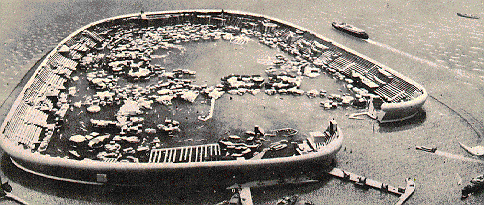
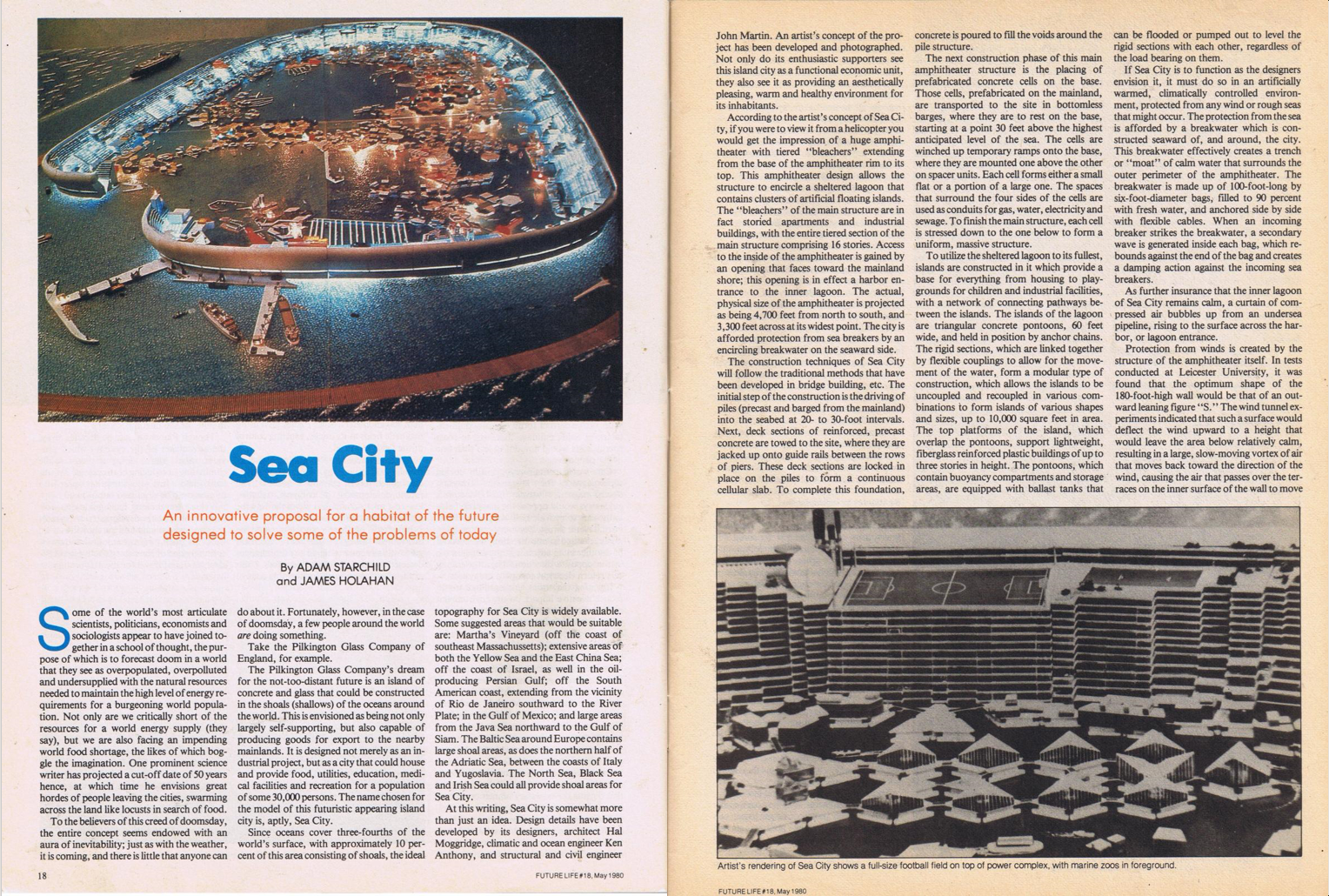
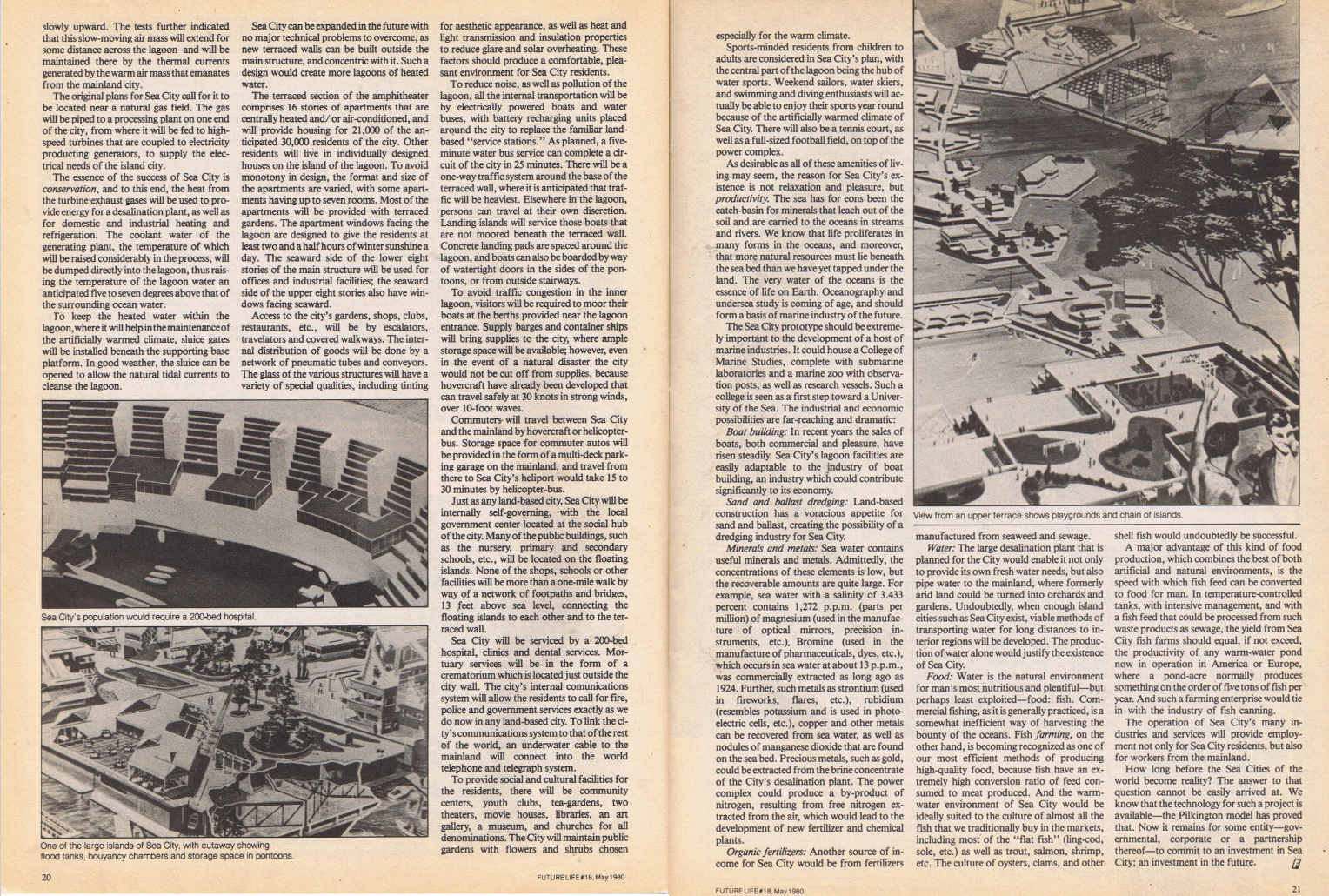
This exact model is even equipped with miniature ships and jetties.
This exact model is even equipped with miniature ships and jetties.
Man is fast running out of living space. Only a quarter of our planet is dry land; the rest is ocean. And our growing numbers are filling that quarter to bursting-point. We have to find a new place to live if we are to survive. There are three choices: on other planets, underground, and on the sea. The last of these seems the easiest choice. With this in mind, the idea of Sea City has been born - and what a fantastic idea it is! The architects who have planned this amazing place have built beautiful scale models to show what they have in mind. Looking at the models, our thoughts catapult us into the future - to the day when Sea City could be a reality ...
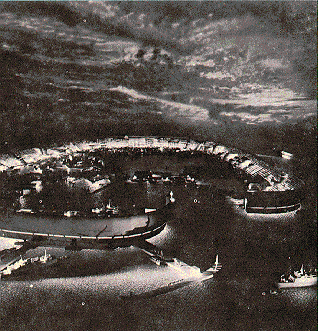
Clouds superimposed on a screen behind the illuminated model give a realistic impression of Sea City at dusk.
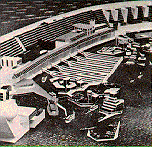
Artist's impression of an inside view of Sea City, with islands and terraces.
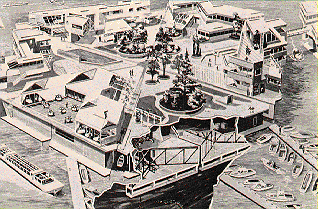
The islands inside the lagoon would comprise of six triangles, each 120 feet long with flood tanks to keep the sections level according to the building load carried.
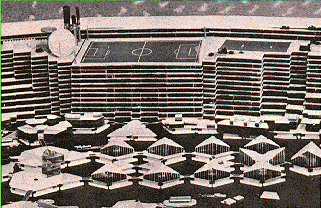
Sea City would even have its own football stadium (to background) and a Marine Zoo (floating, wedge-shaped buildings, to foreground).
On top of all this there are many public gardens, two theatres, a cinema, six churches and no less than fourteen restaurants. (There are also twenty-seven schools, but you don't want to know about those!) The biggest attraction of all is the Marine Zoo, an extra-ordinary place built half under the water, where we can watch strange creatures of the sea living in their natural conditions. Sea City is a wonderful place for Mum and Dad, too. Gleaming shopping arcades span the south side of the city, all under cover so that Mum doesn't get wet when she's staggering home with the week's provisions on a rainy day.
There's plenty of work close at hand for Dad. In the city itself are fish-farming plants, sand and ballast centres (these valuable building materials are dredged up from the ocean bed below), freshwater production plants and Marine Study Laboratories. If none of these suit him, Great Yarmouth - with its growing industry - is only a few minutes away by hoverferry.
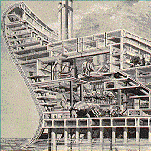
A cross-section of Sea City's wall revealing the power complex.
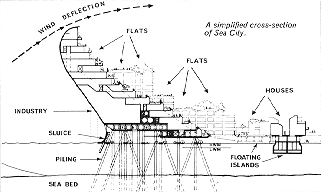
The answer is that they won't - for the architects who designed the city have learnt a lesson from the builders of medieval towns. Just as Sea City will be threatened from the outside by wind and waves, so towns in the Middle Ages were threatened by attacking armies. These armies were kept at bay by two lines of defence. The main one was a strong wall, twelve-foot thick and with firm foundations. In the same way, Sea City protects itself with that massive structure of reinforced concrete, specially curved to deflect the wind above it.
But the wall-builders of ancient times knew that one line of defence was not enough. However strong it was, attack after attack with a battering ram would eventually knock it down. So they devised a very clever way of limiting the force with which the attackers could strike their wall. They called it a moat.
In just the same way, the planners of Sea City knew that their wall of concrete would soon be brought down if the great waves were not checked before they crashed up against it. So they built a 20th-century version of the medieval moat.
All around the city, except for a gap to let ships through (just like a drawbridge), stretches a line of sausage-shaped canisters. These are positioned at some distance from the wall, and being part-filled with fresh water float low in the sea. They are enough to break the back of the giant waves coming crashing in, reducing them to harmless ripples by the time they reach the wall.
Oh, yes! Sea City is a possibility all right. It could be started tomorrow if the money were readily available.
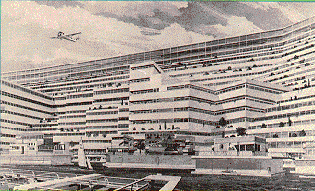
The transportation area (foreground) would link Sea City with the mainland.
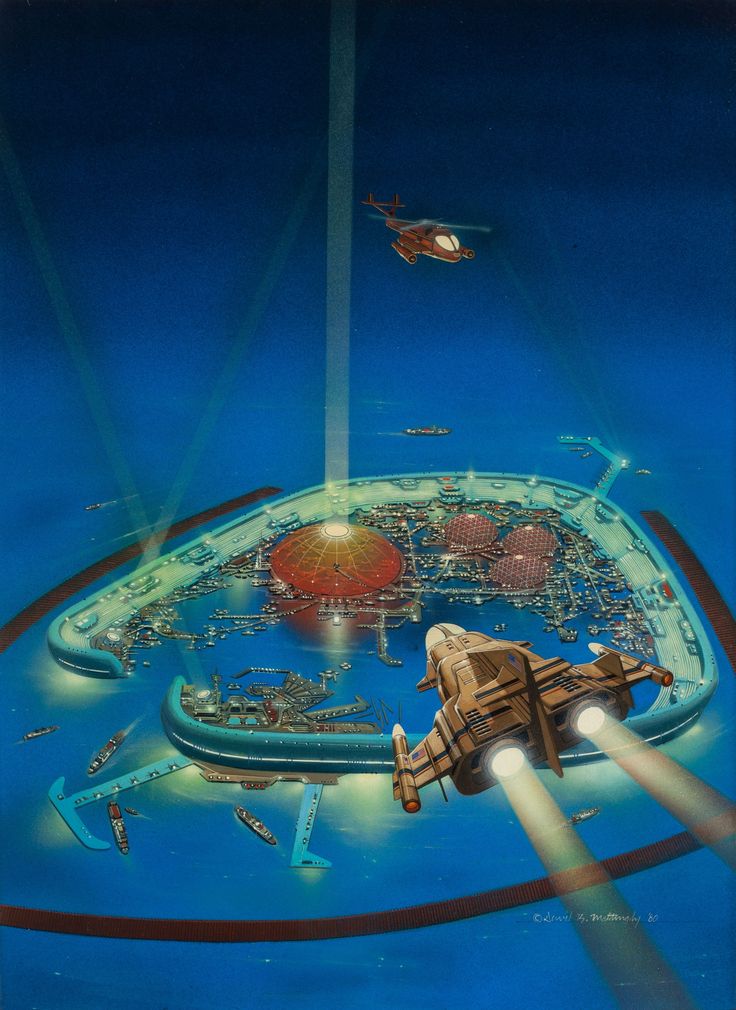 The Sea City Model was introduced around 1968 in London.
More information about the origins of the Sea City study and model were
provided by hypatia@fair.net in
June 1998.
The Sea City Model was introduced around 1968 in London.
More information about the origins of the Sea City study and model were
provided by hypatia@fair.net in
June 1998.The concept was promoted and financed by:
Group Public Relations
Pilkington Brothers Limited
St. Helens, Lancashire, England
The original members of the Pilkington Glass Age Development Committee are:
Thanks to SP for clarifying the source of Starlog's spin off "Future
Life" magazine. An archival copy of Future Life #18 is available.
[ #18,
Other Issues, Local Copy,
Article (HTML) ]

|
More information about the origins of the Sea City study and model were provided by Henry G. Chatroop (Strontium Black Cat) <technology1701@gmail.com> in January 2017.
|
|
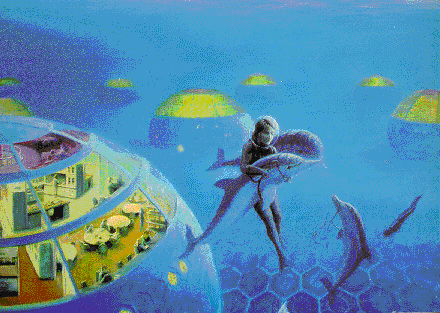
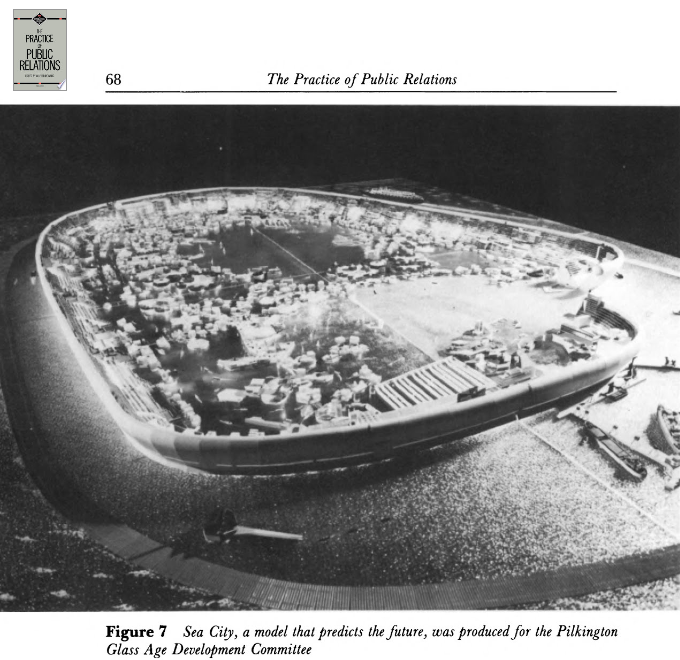
Future Sea Communities and Underwater HabitatsA future community based in the sea is still an exciting possibility. See the following works:
|
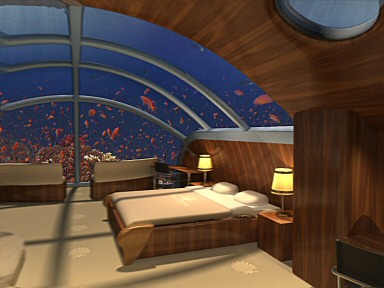
Image used with permission of L. Bruce Jones of Poseidon Undersea Resorts/US Submarines. |
Deep Ocean Technology - Water Discus Underwater HotelDeep Ocean Technology is developing the "Water Discus Underwater Hotel" for a range of leisure and educational experiences. See the following links:
|
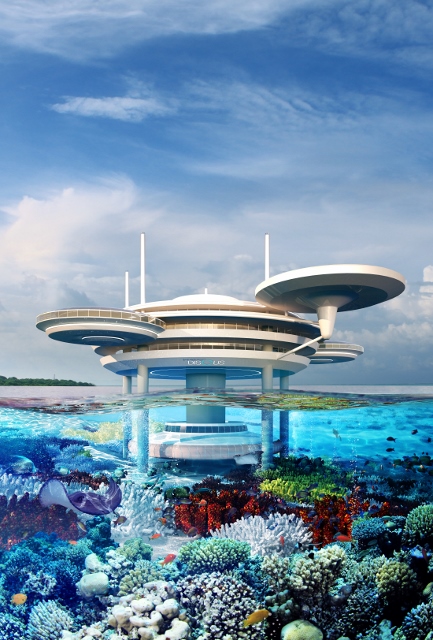
Image used with permission of Robert Bursiewicz at Deep Ocean Technology. |
Seasteading Institute - Floating CitiesThe Seasteading Institute, a non-profit organisation and community of those interested, is developing plans and esigns for future floarting cities.
|
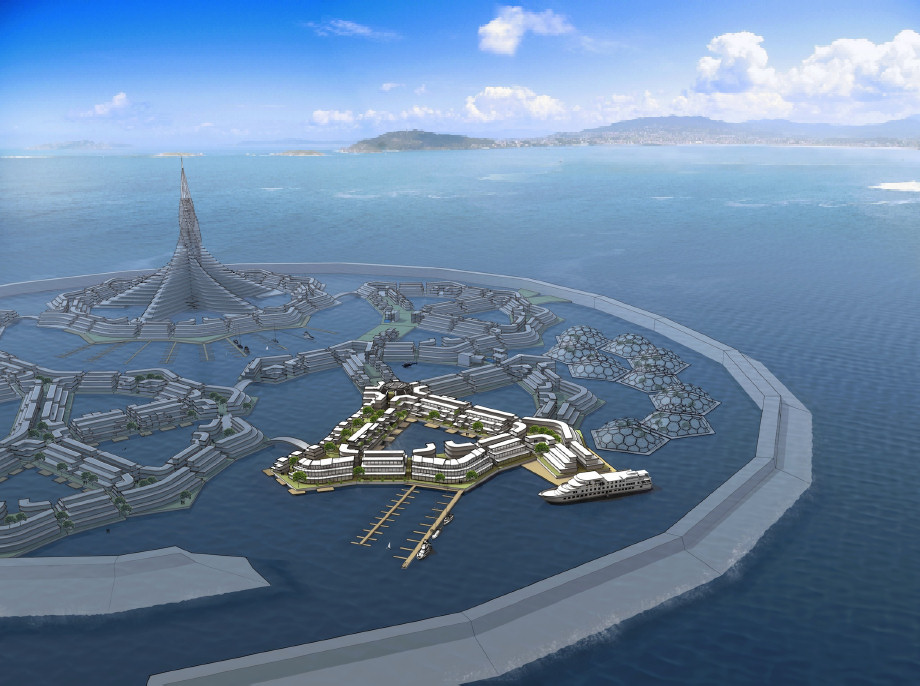
Image from Seasteading Institute by permission of Randy Hencken |
Designing the Future with Jacque FrescoJacque_Fresco writings on his vision of the future in the books:
See also the 2015 The Choice is Ours documentary films describing the Venus Project and Jacque Fresco designs. |
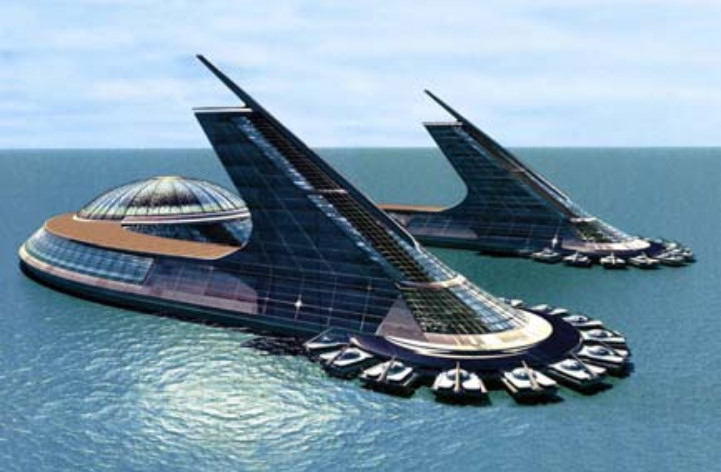
Image from The Venus Project |
GreenBiz - Floating cities: the future or a washed-up idea?Brydon T. Wang. June 12, 2019https://www.greenbiz.com/article/floating-cities-future-or-washed-idea The United Nations has expressed support for further research into floating cities in response to rising sea levels and to house climate refugees. A speculative proposal, Oceanix City, was unveiled in April 2019 at the first Round Table on Sustainable Floating Cities at U.N. headquarters in New York. |
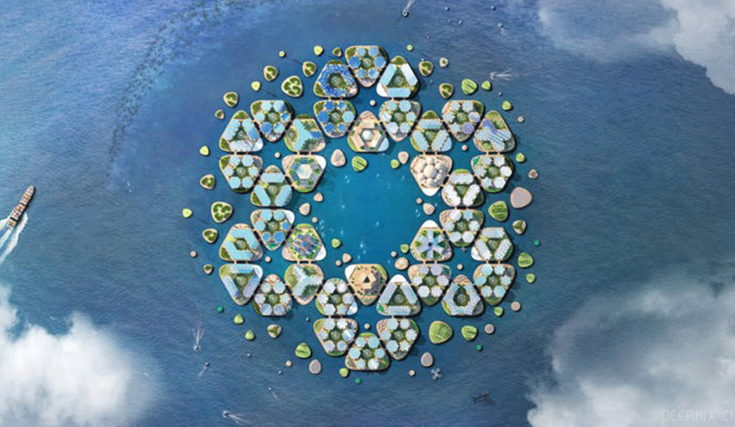
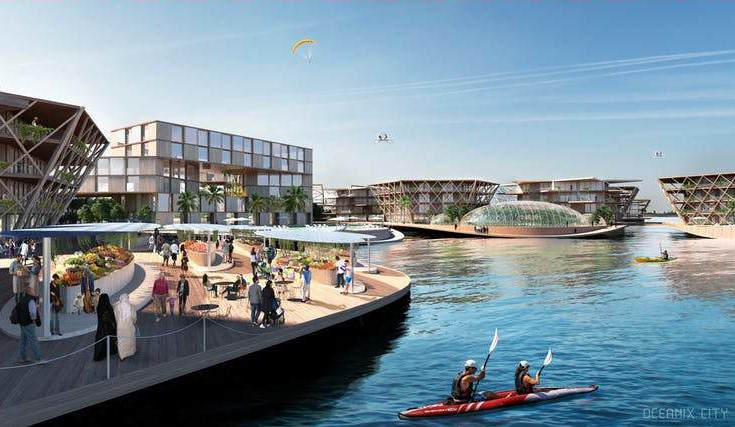
Images from Brydon T. Wang and Queensland University of Technolgy |
Nemos GardenUnderwater cultivation of terrestrial plants. Facility off the Italian coast. See http://www.nemosgarden.com/ |
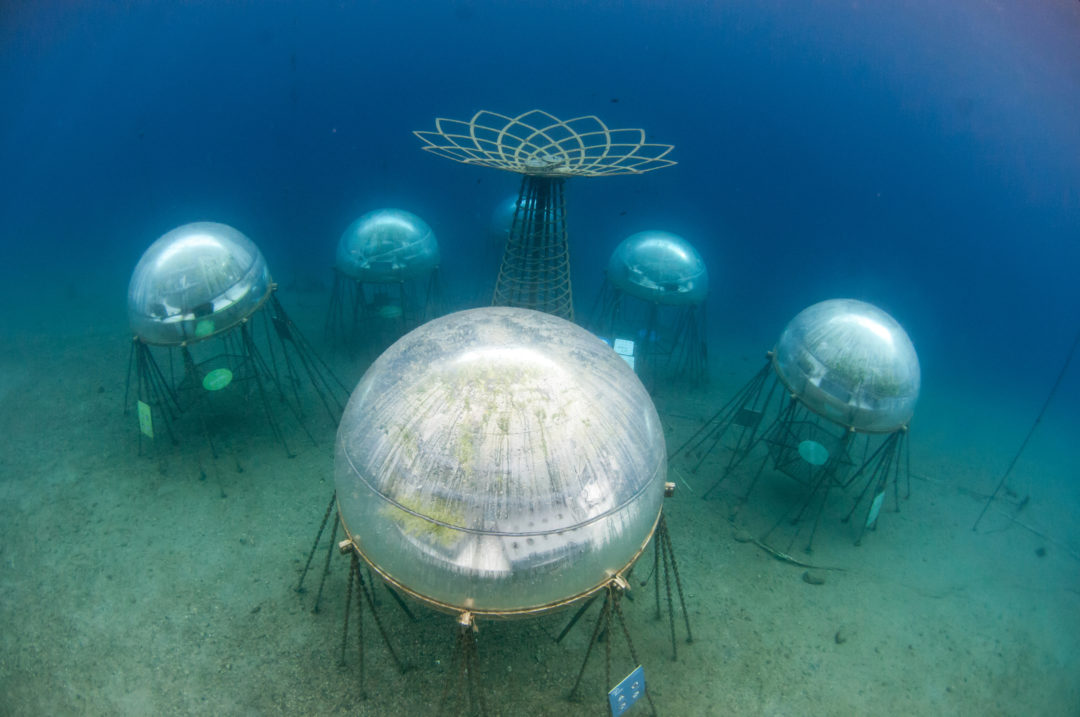
Image from Nemos Garden Gallery |
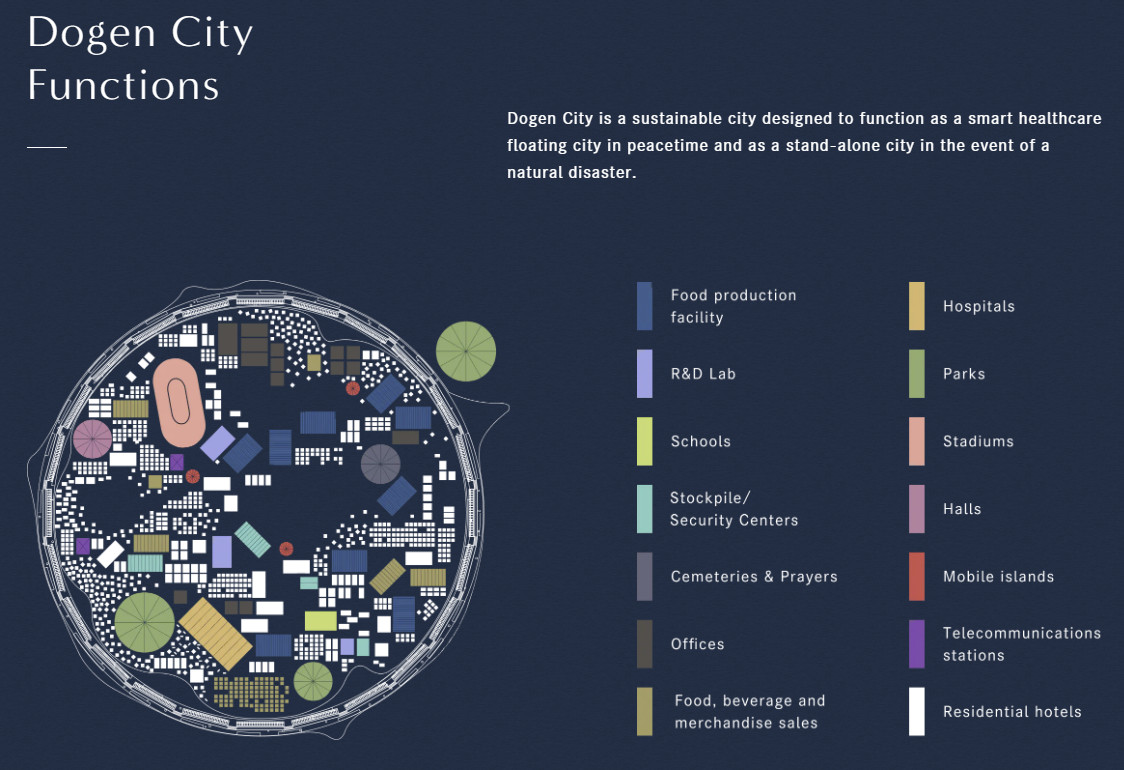
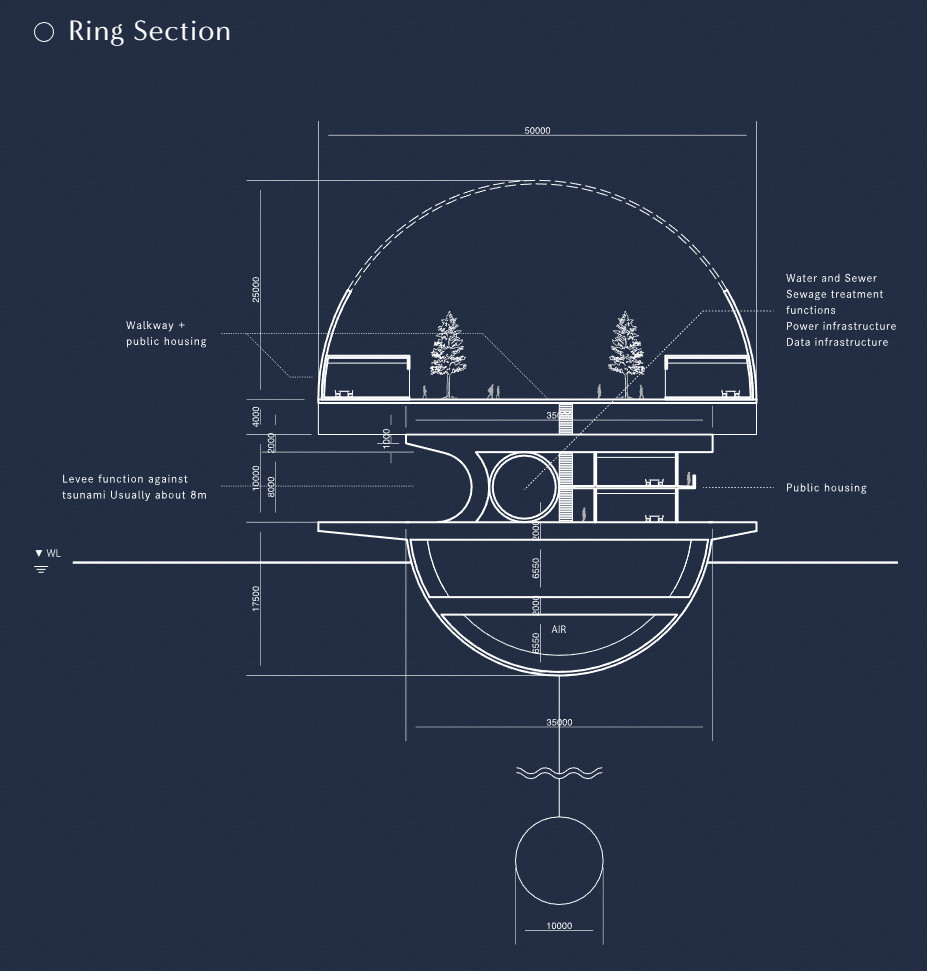
N-ARK - Dogen CityDogen City is a smart healthcare city floating on the sea that integrates food environment, architecture, data, energy, and ocean resource with a focus on healthcare. Dogen City is a sustainable city designed to function as a smart healthcare floating city in peacetime and as a stand-alone city in the event of a natural disaster. |
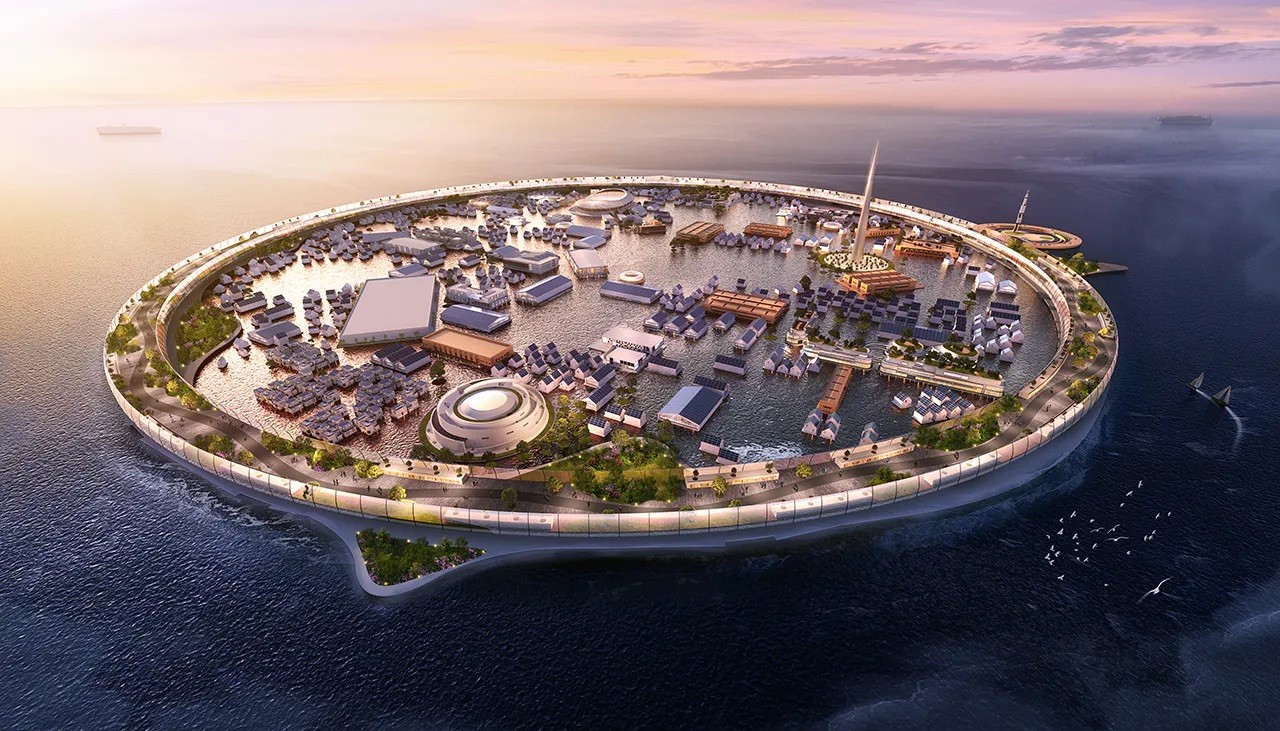
Image from https://www.n-ark.jp/en/dogen-city [Functions, Ring Section, Press Kit Images] |